
From Lagos to Johannesburg, African entrepreneurs are rewriting the rules of franchising, and the numbers prove it.
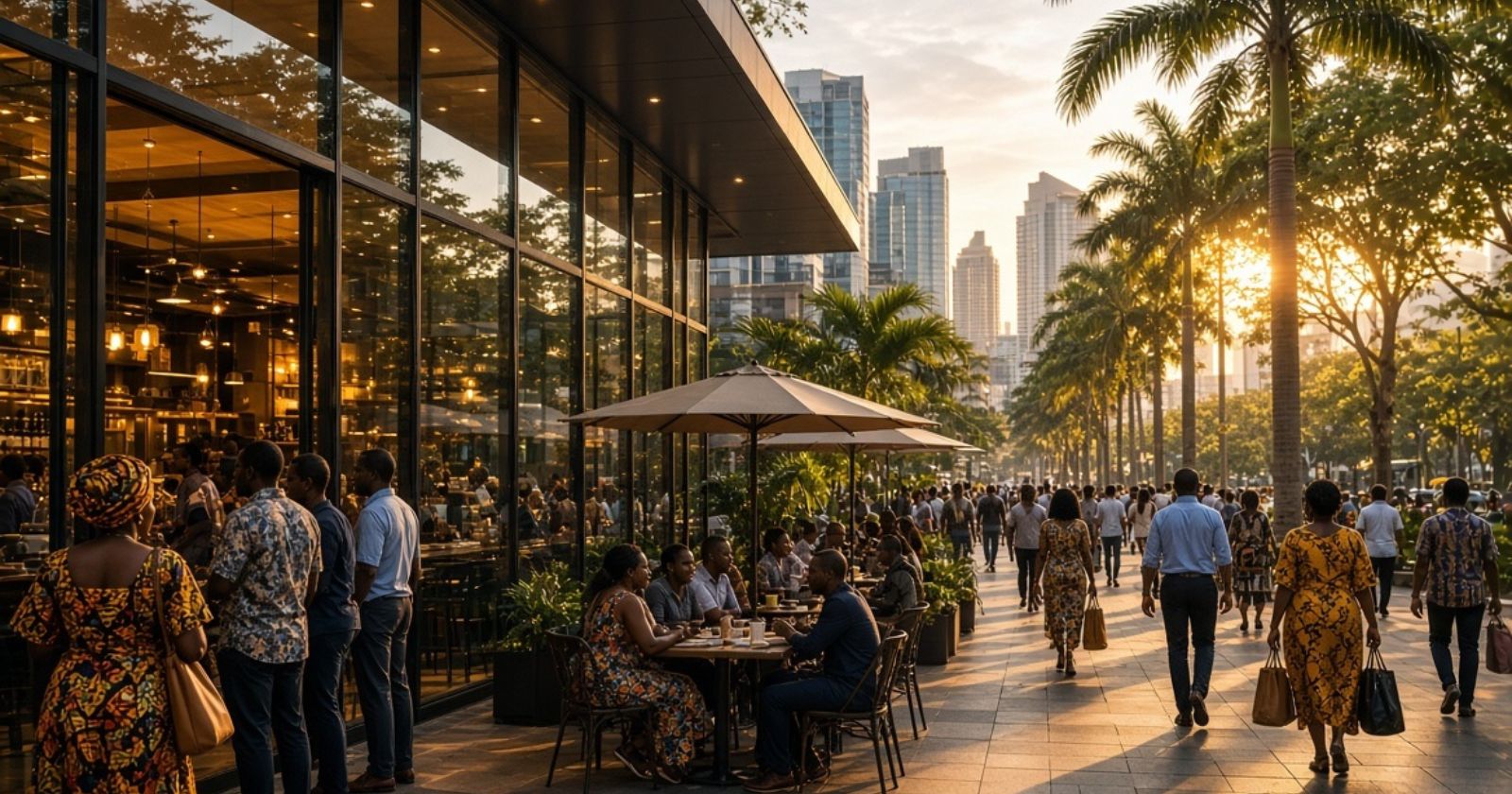
Walk through Lagos at rush hour, Johannesburg’s shopping centres, Nairobi’s busy streets or Dakar’s growing suburbs and the pattern is hard to miss. Familiar logos, long queues, the smell of fried chicken or pizza dough drifting from modern storefronts. At first glance it looks like the usual story of global brands planting flags. Look closer and a different picture emerges.
African entrepreneurs and local systems are not simply importing ready-made models. They are bending the franchise format to fit local tastes, prices and realities, building businesses that actually work on the ground. In 2026, franchising on the continent is no longer a distant promise. It is already happening- store by store, city by city.
Africa is shifting from a long-term opportunity that franchisors could afford to watch from a distance to a market that demands attention today. Across its major cities, demand is rising for organised food, hospitality, retail, education, healthcare and consumer services. At the same time, a new generation of African entrepreneurs is creating home-grown concepts with real ambitions to expand across borders. The opportunity is not just the size of the population. It is the combination of rapid urbanisation, rising consumer aspirations, growing digital adoption and a clear appetite for proven business models.
The numbers underline the shift. The African Development Bank projects the continent’s economies to grow 4.2% in 2026, following estimated growth of 4.4% in 2025. East Africa is expected to lead at 5.9%, followed by West Africa at 4.7%. Meanwhile, the World Bank projects Africa’s urban population will nearly double to 1.5 billion by 2050, creating a rapidly expanding base of urban consumers and entrepreneurs. The challenge, of course, is that these opportunities exist across vastly different economies, which is why localisation and the right franchise partners remain critical to sustainable growth.
South Africa: Where Franchising Grew Up
South Africa remains the clear leader and the place where the model has matured most. The Franchise Association of South Africa (FASA) last full survey recorded 727 franchise systems and more than 68,000 franchisees, a 43% jump in franchisees since 2019. The sector turns over around R1 trillion and contributes roughly 15% of the country’s Gross Domestic Product (GDP), while employing close to half a million people.
By the end of 2025 FASA was already talking about 782 systems. In mid-2026 the Competition Commission opened a formal market inquiry into the industry, describing a landscape of more than 800 brands. When regulators start looking this closely, you know the sector has real economic weight.
What stands out is the staying power. Nearly nine out of ten franchisees reach break-even in their first year. Most systems are South African-owned. Almost 40% of local brands already operate outside the country’s borders, mainly in neighbouring markets but also further afield. Ownership by previously disadvantaged South Africans has risen significantly, even if the transformation story is still incomplete.
The Brands That Prove It Works
KFC still leads the international pack. It now runs more than 1,300 restaurants across 25-plus African countries, with South Africa alone accounting for around 1,200 outlets. The brand has succeeded by localising aggressively, sourcing a large share of ingredients locally in markets like Nigeria and adapting menus to what people actually want to eat.
Debonairs Pizza, born in South Africa under Famous Brands, has become one of the continent’s clearest success stories. By mid-2025 it operated 868 outlets across 16 countries (mostly in Africa, plus the UAE). In South Africa it is the largest pizza chain and the second-biggest quick-service restaurant brand after KFC. The company keeps growing by focusing on value: affordable “Real Deal” pizzas, chicken sides, and relentless store openings, at peak periods roughly one every two weeks.
Chicken Republic, a Nigerian brand under Food Concepts, shows what a home-grown quick-service restaurant can achieve. It now has well over 190 outlets (some counts put the total higher) across Nigeria and Ghana. It built its reputation on affordable, familiar meals- jollof rice, fried chicken and local flavours, delivered through a disciplined mix of company-owned and franchised stores. Even in a tough Nigerian economy, the parent company managed strong profit growth by tightening operations and the supply chain.
Nando’s, another South African original, turned peri-peri chicken into a global story while keeping a solid African footprint. Hundreds of restaurants operate in South Africa, with additional presence in Botswana, Zimbabwe, Zambia, Mauritius, Eswatini and beyond.
Shoprite, Africa’s largest supermarket group, uses franchising through its OK Franchise division. That arm alone manages more than 500–600 stores across South Africa, Namibia and Eswatini under formats like OK Foods, OK MiniMark and OK Express. The group as a whole runs thousands of stores, but the franchise model helps it reach smaller towns and neighbourhoods more efficiently.
What’s Happening Beyond South Africa
Nigeria’s sheer size keeps attracting both local and international players. Chicken Republic is the standout local example, but international brands have learned the hard way that they must adapt or risk failing.
Kenya has become the natural hub for East Africa. Nairobi’s infrastructure and relatively sophisticated consumer market support brands in food, retail, education and services.
Senegal offers one of the cleanest recent snapshots. In June 2026 the Association Sénégalaise de la Franchise reported around 420 brands and 1,540 outlets, generating between 1,150 and 1,380 billion CFA francs. Growth is no longer limited to Dakar. Secondary cities are seeing more activity, especially in quick-service restaurants, distribution and personal services.
The Hottest Growth Sectors
While quick-service restaurants remain the historic locomotive, the fastest acceleration is occurring where franchising addresses structural gaps (data drawn from 2025 continental rankings still referenced in 2026 analysis):
- Technology, digital & financial services: Mobile financial agent networks operating as micro-franchises already exceed 300,000 active points continent-wide. Urban mobility, express logistics and digital micro-credit show strong double-digit CAGRs.
- Education and skills: Digital vocational training and educational micro-franchises continue rapid growth.
- Healthcare, energy and agri: Community health micro-franchises, solar solutions, cold-chain and modern agri-processing models post robust annual growth.
- Foodservice and retail: Still the largest by volume, with ongoing menu and format localisation.
These “necessity” franchises tend to hold up better when consumer spending tightens. They also create formal jobs and transfer skills in ways that matter for long-term development.
The Bigger Forces at Play
The African Continental Free Trade Area (AfCFTA) is slowly making cross-border expansion less painful. A single market of 1.4 billion people, rapid urbanisation, and a projected consumer class of around 1.1 billion by 2030 create a powerful backdrop. Banks keep pointing out that if South Africa can get franchising to 15% of GDP, the rest of the continent has room to grow in the same direction, provided financing and skills catch up.
None of this is easy. Raising capital remains the biggest headache for would-be franchisees. Infrastructure gaps, currency swings and uneven rules still slow things down. In South Africa the new Competition Commission inquiry will test whether growth is happening fairly and whether more people from historically disadvantaged groups can actually get a proper seat at the table.
The Real Takeaway
Franchising in Africa in 2026 is no longer a polite future promise. It is happening right now- store by store, city by city.
The brands that are winning treat the continent as a collection of distinct markets with their own tastes, cost structures and talent. KFC localises. Debonairs keeps prices sharp and opens relentlessly. Chicken Republic stays true to local flavours while scaling with discipline. Nando’s turned a South African idea into a global brand without losing its roots.
Those who listen, partner properly and build for the long term are already finding that the opportunity is real, messy, exciting, and still wide open.