
From commercial cleaning to integrated facilities management, franchise networks are transforming an essential service industry through recurring contracts, specialist services, technology and global expansion.
Cleaning and facilities management have developed into sophisticated service businesses supporting some of the world’s largest workplaces, healthcare facilities, hotels, retailers, schools, warehouses and industrial sites. As businesses increasingly outsource non-core operations, franchise networks are finding opportunities to build scalable businesses around everything from commercial cleaning and specialist sanitation to maintenance and integrated facilities management.
The global cleaning services market was valued at $442.1 billion in 2025 and is expected to reach $770.8 billion by 2033, growing at a compound annual growth rate of 7.3%, according to Grand View Research’s latest 2026 analysis. North America accounted for 31.8% of global revenue in 2025, while the research covers markets across Europe, Asia Pacific, Latin America and the Middle East and Africa.
The contract-cleaning segment alone was estimated at $384 billion in 2024 and is projected to reach $555.4 billion by 2030, with commercial customers representing 49.7% of the market in 2024.
For franchising, these numbers point to a large and increasingly professionalised service economy in which local operators can deliver services under established systems and brands.
What Are Cleaning and Facilities Management Franchises?
A cleaning franchise gives an entrepreneur the right to operate a business using a franchisor’s brand, systems, training, processes and support.
Unlike restaurant, retail or other location-based franchises, a commercial cleaning franchise does not necessarily require a customer-facing premises. The business is often built around contracts with offices, healthcare organisations, educational institutions, retailers, hospitality businesses, warehouses and other commercial properties.
The services can range from routine janitorial work to carpet and floor care, window cleaning, pressure washing, post-construction cleaning and specialised healthcare sanitation.
Facilities management takes the concept further by bringing multiple building-support functions together. Depending on the provider, these can include cleaning, maintenance, landscaping, waste management, energy services, security coordination and other operational requirements.
That makes facilities management a broader B2B proposition: instead of selling a single cleaning service, the provider can become part of the customer’s wider building-operations strategy.
A Growing Facilities Management Opportunity
The wider facilities-management market is also expanding as organisations seek greater efficiency from outsourced building operations.
Grand View Research estimates the global facility management services market at $45.9 billion in 2025, rising to an expected $82.9 billion by 2033 at a 7.8% CAGR. Its latest research identifies North America as the largest regional market in 2025 and Asia Pacific as the fastest-growing region, with a projected 10.4% CAGR from 2026 to 2033.
A separate Grand View Research analysis puts the global integrated facility-management market considerably higher, at $184.2 billion in 2025, reflecting differences in how the two markets are defined. That research forecasts the integrated market to reach $362.3 billion by 2035.
Rather than treating these estimates as interchangeable, the figures illustrate the breadth of the industry: from individual outsourced services to integrated contracts covering multiple aspects of building operations.
The International Facility Management Association’s latest global data also points to increasing operational pressure. Its inaugural Facility Management Workload Index, based on more than 1,400 global responses covering professionals across 80 countries and 3.2 billion square feet of managed space, recorded a score of +43. A positive score indicates that more facility professionals expected their workload to increase than decrease.
Why Cleaning Is Well Suited to Franchising
Cleaning has several characteristics that make it compatible with franchising. The service can be delivered locally, while the franchisor can standardise training, operating procedures, equipment, quality-control systems, sales processes and customer reporting.
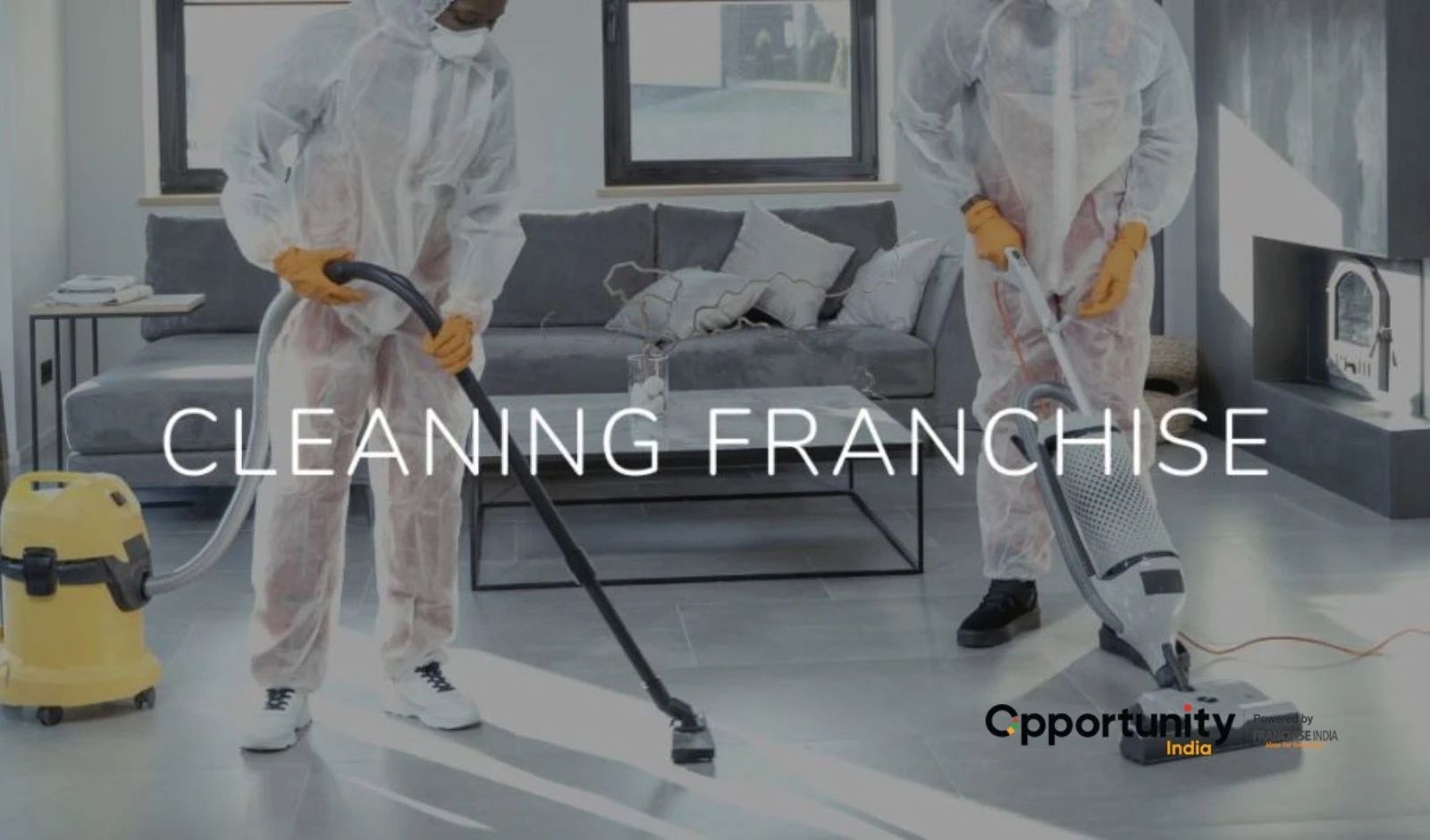
This structure also allows a franchise brand to build a network of independently owned operators while maintaining common standards.
Vanguard Cleaning Systems provides a strong North American example. Founded in 1984, the organisation says it has more than 2,000 independently owned janitorial franchise businesses, supported by more than 50 independently owned area franchise offices across the US and Canada. Those businesses serve more than 15,000 commercial cleaning accounts across offices, healthcare, education, industrial and manufacturing facilities.
Its model also demonstrates how cleaning franchising can operate at two levels. Area franchise businesses can support local janitorial franchisees, including account sales, billing and collections, while individual franchise owners concentrate on service delivery and customer relationships.
From Basic Cleaning to Specialist Services
Commercial cleaning is no longer limited to vacuuming, dusting and restroom maintenance. Franchise networks increasingly offer specialised services that can address specific industries or building requirements. These include carpet and upholstery cleaning, hard-floor care, window washing, power washing, post-construction cleaning, day-portering and healthcare services.
Stratus Building Solutions, which offers unit and master franchise opportunities across the US and Canada, provides an example of this broader model. Its service portfolio includes janitorial and office cleaning, day-portering, carpet cleaning, post-construction work, hard-floor care, healthcare services, window washing and power washing.
Healthcare is particularly specialised. Stratus says employees working within its Health Care Division must complete certification through its hospital and medical clinical training programme, reflecting the additional procedures required in medical environments.
The ability to offer specialist services can help franchisees serve a wider range of customers while giving franchisors additional ways to differentiate their systems.
The Importance of B2B Contracts
A major distinction between commercial cleaning and many consumer-facing franchises is the importance of contractual relationships.
An office, hospital or retail chain may require cleaning every day or several times a week. Instead of relying on individual transactions, the franchisee can build a portfolio of scheduled accounts.
Coverall, which has operated for more than four decades, says its network includes more than 8,000 franchise businesses across 90 markets, serving approximately 50,000 customers. Its franchise business owners provide commercial cleaning across the network, while the company also operates a national-accounts programme for customers with multiple locations.
The multi-location model is particularly relevant to franchising because national customers may want consistent standards across offices or sites in different cities.
For franchise systems, the challenge is to combine that consistency with the local knowledge and workforce required to deliver the service.
International Expansion Through Master Franchising
Cleaning is also a natural fit for master and area franchising. Instead of the franchisor establishing every location itself, a regional or master franchisee can develop a territory, recruit franchisees and support local operations.
Jani-King illustrates how this structure can operate internationally. Its current network information lists 120 support offices, 10 international countries and 6,900 unit franchises. The company offers both domestic and international franchisor opportunities, allowing franchise partners to develop regions or international territories.
Its current international locations span markets including the UK, Belgium, Portugal, Brazil, Bahrain, Australia and New Zealand.
This model gives cleaning brands a route into new markets without requiring corporate ownership of every local operation.
Australia Shows the Model’s Regional Potential
The franchise structure is not limited to North America. In Australia and New Zealand, AMC Commercial Cleaning says it has more than 25 years of industry experience and currently works with 500 franchisees employing more than 2,500 people across the two markets.
Its network serves commercial customers through locally operated franchise businesses, demonstrating how cleaning systems can scale across geographically dispersed markets while retaining local ownership.
Australia’s commercial property, healthcare, education, hospitality and retail sectors provide multiple customer categories for such operators.
Technology Is Moving into Cleaning Operations
Technology is increasingly changing how franchisees manage people, customers and facilities.
Digital scheduling platforms can allocate cleaning teams and jobs, while mobile applications can record attendance and service completion. Digital inspection tools can allow supervisors to document work and provide customers with reports.
The shift becomes even more significant when cleaning is combined with facilities management.
Connected-building systems can provide information on occupancy, energy consumption, temperature and equipment performance. Data can then be used to identify maintenance requirements or improve resource allocation.
IFMA’s research increasingly highlights the importance of data and analytical capabilities within facilities management, with its research programme examining how data skills, AI and evidence-based decision-making are reshaping the profession.
For franchise systems, these technologies can help standardise operations across multiple territories and give franchisors greater visibility into service quality.
Robotics and Automation
Automation is another area gaining attention. Autonomous floor-cleaning equipment can perform repetitive work in large facilities, potentially allowing human teams to concentrate on detailed cleaning, sanitation, inspections and tasks requiring judgement.
Grand View Research identifies AI, IoT and robotic capabilities, including autonomous floor cleaners, among the technology developments influencing contract cleaning.
The technology does not necessarily eliminate the need for cleaning personnel. Instead, it can change how labour is allocated, particularly in large environments such as airports, warehouses, shopping centres and industrial facilities.
For franchisees, this could eventually mean greater productivity from the same workforce, although equipment costs, training and site suitability remain important considerations.
Sustainability Becomes a Commercial Requirement
Sustainability is also moving closer to the centre of the cleaning proposition. Commercial customers are increasingly evaluating suppliers based not only on price and service quality but also on cleaning products, chemical use, waste, water consumption and equipment efficiency.
The contract-cleaning market is seeing growing interest in green cleaning, with Grand View Research identifying demand for non-hazardous and non-toxic products as one factor supporting market growth.
For franchise networks, standardisation can be valuable here. A franchisor can establish approved products, procedures and equipment across its network rather than leaving environmental practices entirely to individual operators.
At the facilities-management level, the opportunity becomes broader, with sustainability increasingly linked to energy management, building efficiency and resource utilisation.
The Business Behind the Cleaning
Despite relatively modest physical infrastructure compared with many retail franchises, cleaning franchises are operationally demanding businesses.
Franchisees need to recruit and manage staff, schedule teams, maintain equipment, handle customer relationships, monitor quality, manage supplies and control costs.
Labour is particularly important because service quality depends heavily on having reliable teams available at the right time.
As an operation grows, the owner’s role can shift from performing cleaning work to managing supervisors, contracts, sales and financial performance.
This is why franchise systems can be valuable: training, established processes, customer-management tools and brand recognition can provide structure for operators who may be entering the industry for the first time.
However, the level of support varies between franchisors. Prospective franchisees need to examine the franchise agreement and disclosure documentation to understand exactly what is included, from leads and contracts to training, technology and operational support.
What the Franchise Opportunity Looks Like
Cleaning and facilities management offer several potential routes into franchising. A small unit franchise can focus on servicing customers within a local territory. A larger franchise operation can develop multiple teams and commercial accounts. An area franchise can support other franchisees, while a master franchise can provide rights to develop a larger geographic market.
The capital requirement can therefore vary substantially.
Beyond the initial franchise fee, prospective operators need to consider working capital, equipment, vehicles, insurance, staff costs, technology, royalty payments, marketing fees and territory restrictions.
Contract terms also matter. A large account can generate substantial revenue but may require significant labour and equipment. Pricing needs to account for wage changes, transportation, supplies and the cost of maintaining service standards.
Why the Sector Matters for Global Franchising
Cleaning and facilities management represent a distinctive part of the franchise economy because the model combines local service delivery with centralised systems.
A franchisee can build relationships with businesses in a particular market, while the franchisor provides a recognised brand, training, operating procedures and technology.
That structure is particularly useful for companies with multiple sites. Customers want consistency, but cleaning remains a highly localised service requiring people on the ground.
The next stage of growth is likely to involve more integration. Cleaning businesses can add specialist services; facilities-management providers can coordinate broader building operations; and technology can connect the two through scheduling, reporting, automation and data.
The market opportunity is also becoming increasingly global. Grand View Research identifies Asia Pacific as the fastest-growing region in its facility-management services forecast, while established franchise networks already operate across North America, Europe, Australia, Asia and other international markets.
The Future of Cleaning and Facilities Management Franchises
The cleaning franchise of the future is unlikely to be defined simply by the number of buildings it cleans. It will increasingly be defined by the breadth of services it can coordinate, the consistency of its operations and the technology it uses to manage people, equipment and customer requirements.
For franchisees, that means the opportunity extends beyond traditional janitorial work into specialist cleaning, multi-location contracts and facilities support. For franchisors, it creates opportunities to develop scalable systems that can be replicated across territories and, through master franchising, across national borders.
With the global cleaning services market forecast to reach $770.8 billion by 2033 and facilities-management workloads showing continued pressure, the sector is becoming an increasingly structured part of the global service economy.
For businesses looking to outsource the work of maintaining their physical environments, and for entrepreneurs looking for service-based franchise models, cleaning and facilities management are evolving from traditional support functions into a technology-enabled, contract-driven and increasingly global franchise opportunity.