
From digital-first experiences and creator-led discovery to flexible careers and faster feedback, Gen Z is changing what customers expect from franchise brands, and what young entrepreneurs expect from franchisors.
For decades, franchising rested on a proven brand, a standardised system and franchisees willing to follow the playbook. Gen Z is rewriting parts of that formula.
The generation born roughly between the late 1990s and early 2010s is no longer just a young consumer segment. Its oldest members are entering their late twenties as business owners and decision-makers while forming an increasingly important share of the customer base. This creates a two-sided shift: Gen Z customers demand convenience, digital connection, cultural relevance and authenticity; Gen Z entrepreneurs seek ownership, flexibility, continuous learning and real influence.
McKinsey’s 2025 research across 18 countries found that 65% of Gen Z respondents, on average, were willing to splurge in categories that matter to them — the highest of any generation (85% in India). The same study showed higher use of grocery and food delivery among Gen Z than older cohorts. For franchisors, the question is no longer only “What does the brand sell?” but “How does the customer experience it?”
The Franchise Customer Is Becoming Digital-First
Discovery, ordering, loyalty and content now form one continuous journey that usually starts online.
Gen Z does not separate the physical and digital versions of a brand. Discovery happens on TikTok or Instagram, menus are explored on apps, orders are placed at kiosks and the store itself becomes content.
Deloitte’s 2025 Digital Media Trends reported that 56% of Gen Z considered social media more relevant than traditional television, and that Gen Z spent about 54% more time than the average consumer on social platforms. In retail research, 64% of Gen Z used social media to research products and 35% used it to discover them; nearly twice the rate of older generations, while 73% still shopped in person at least once a week. A single franchise location can therefore function as a digital media channel.
Gong Cha Proves Tech Is No Longer Optional
Kiosks, mobile ordering and loyalty are becoming core infrastructure, not optional extras.
Bubble-tea brand Gong cha has integrated kiosks, mobile ordering, loyalty programmes, delivery and QR engagement into the customer journey. These tools are designed for Gen Z and millennial preferences while giving franchisees the means to increase digital sales and gather feedback.
As of 2025 the brand operated more than 2,100 locations across 28 countries. In the UK and Ireland it is pursuing multi-unit growth with a long-term target of 500 stores; a 2025 agreement alone covers more than 225 UK sites. For younger consumers an app or self-order kiosk simply feels like the expected way to interact with a modern brand.
Creators Are the New Franchise Marketing Force
Creators and peer recommendations now rival traditional brand recognition.
Deloitte found that roughly half of Gen Z and millennial respondents felt a stronger personal connection with social-media creators than with television personalities. Restaurant franchising is particularly exposed: 65% of consumers followed food and lifestyle topics on social media, and restaurants attributed an average 9.9% increase in B2C revenue in 2024 directly to social strategies.
Franchisees who understand short-form video, local creators and community trends can supply valuable market intelligence to the franchisor. Local relevance increasingly depends on digital fluency as much as central marketing assets.
McDonald’s Wins by Letting Gen Z Remix the Brand
For Gen Z, the strongest brand interactions can be the ones consumers help create.
In a 2025 Canadian campaign, McDonald’s tapped into Gen Z’s appetite for menu hacks by remixing its Menu Song with rapper Lil Yachty and launching a digital Remix Hub. The campaign then turned customer-created combinations into limited-time menu products. According to WARC, it generated more than 90 million impressions, exceeded engagement targets by 770% and delivered a 2.8% sales lift.
For franchise systems, the significance goes beyond one campaign. Gen Z increasingly interacts with brands as participants rather than passive audiences. Creator partnerships, local challenges and user-generated content can give franchisees new ways to build community while keeping campaigns within clear brand guidelines.
The opportunity is to make the franchise network part of the conversation, not simply the point of sale.
For Gen Z, Value Goes Beyond the Price Tag
For Gen Z, value can be measured in convenience, experience and personalisation as well as cost.
Gen Z remains price-conscious, but McKinsey research shows the generation is also willing to spend more in categories it considers important. That creates a broader definition of value for franchise brands.
A faster ordering experience, personalised products, loyalty rewards, convenient locations or a distinctive customer experience can all strengthen perceived value. This is particularly relevant to food and beverage, fitness, beauty, education and service franchises, where convenience and experience can influence purchasing decisions alongside price.
For franchisors, the challenge is therefore not simply to compete on discounts. It is to understand what customers consider worth paying for, and make that value consistent across the network.
Gen Z Is Moving From Customer to Franchise Owner
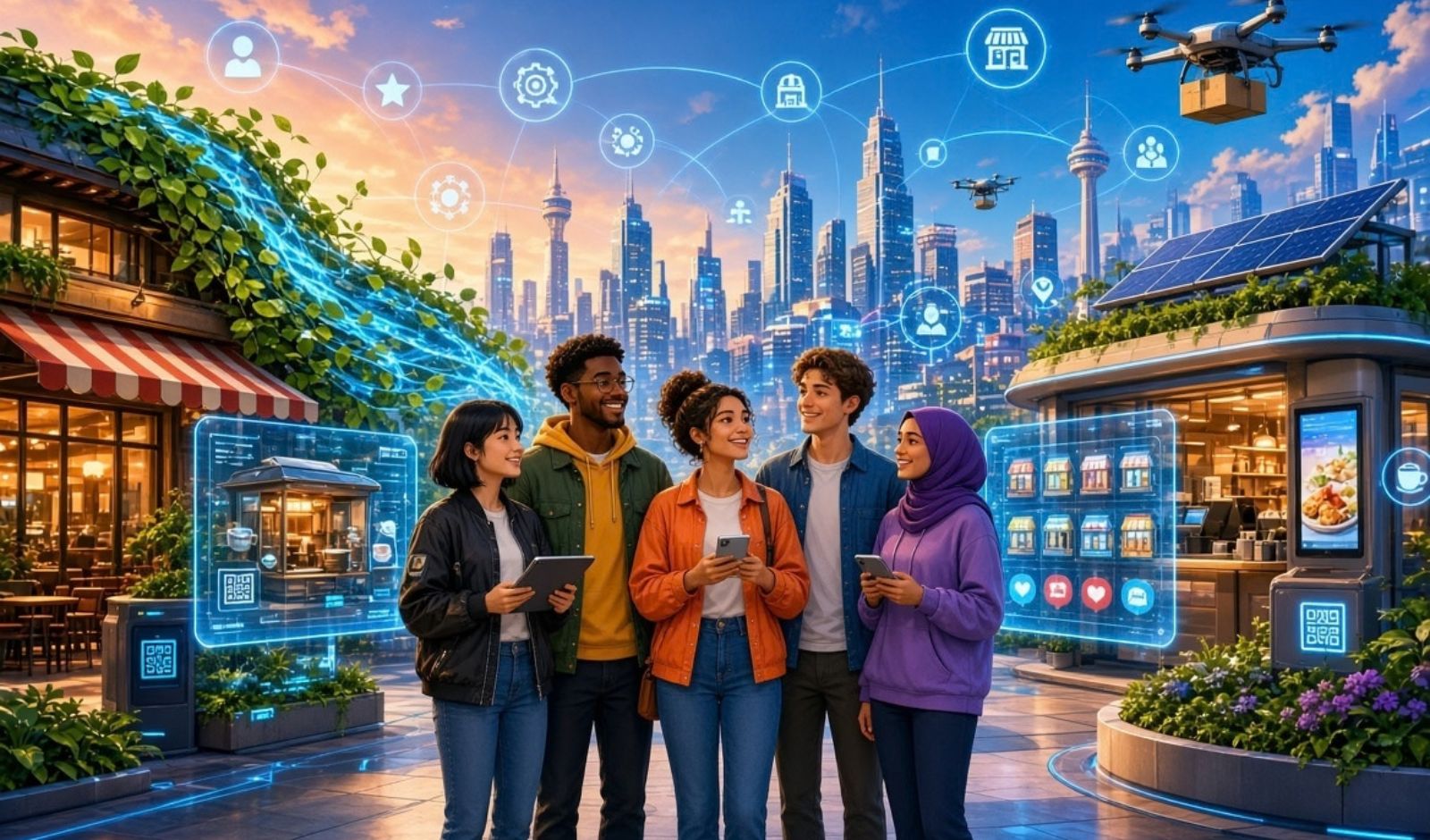
The next generation of franchise owners is entering business earlier and bringing different expectations with it.
Gusto’s 2026 analysis found that Gen Z entrepreneurs started more businesses than Baby Boomers in 2025. More than 70% of Gen Z founders surveyed used AI when starting their businesses, while nearly two-thirds said the technology made the process faster and cheaper. The research also found Gen Z owners were at least twice as likely as older generations to operate hands-on, in-person businesses, sectors that overlap with many franchise categories.
Franchising can appeal to this generation because it offers a middle ground between independent entrepreneurship and corporate employment: the opportunity to own a business while accessing an established brand, operating model, training and support.
Business Insider reported in 2026 that brands including Chicken Salad Chick, Gong cha and 16 Handles were seeing increased interest from younger prospective franchisees. For franchisors, this points to an expanding pool of entrepreneurs who may view franchise ownership not as a second career, but as an early route into business ownership.
The New Franchise Pipeline: From Employee to Owner
Some franchise systems are creating ownership pathways from within their own workforce.
Australia provides an example of how that pipeline can develop. In 2025, 23-year-old Ishika Maharaj became Australia’s youngest Success Tutoring franchise partner after progressing from student to tutor. Her Wetherill Park centre opened with more than 70 members.
The significance extends beyond one franchisee. Businesses can potentially develop future owners from people who already understand the brand, its customers and its operating model. For younger entrepreneurs, that creates a pathway from employee or operator to owner without requiring years of experience outside the system.
As Gen Z enters the workforce and entrepreneurship, such internal ownership pathways could become another tool for franchise recruitment and retention.
Gen Z Wants a Franchise System That Keeps Teaching
For younger operators, training does not end when the franchise agreement is signed.
Deloitte’s 2025 and 2026 research across more than 22,000 respondents in 44 countries highlights the importance Gen Z places on learning, development and skills. In India, 94% of Gen Z respondents identified on-the-job learning as the most helpful tool for career growth.
That expectation has implications for franchising. A training programme delivered during onboarding may establish the basics, but younger franchisees increasingly operate in an environment where technology, customer behaviour and marketing platforms change rapidly.
Franchisors can respond through digital learning libraries, peer communities, performance dashboards, AI-enabled tools, regular coaching and specialised development programmes.
The franchise manual remains important. But for a generation accustomed to constant updates, the more valuable system may be one that keeps teaching long after the manual has been completed.
Local Relevance Matters More Than Ever
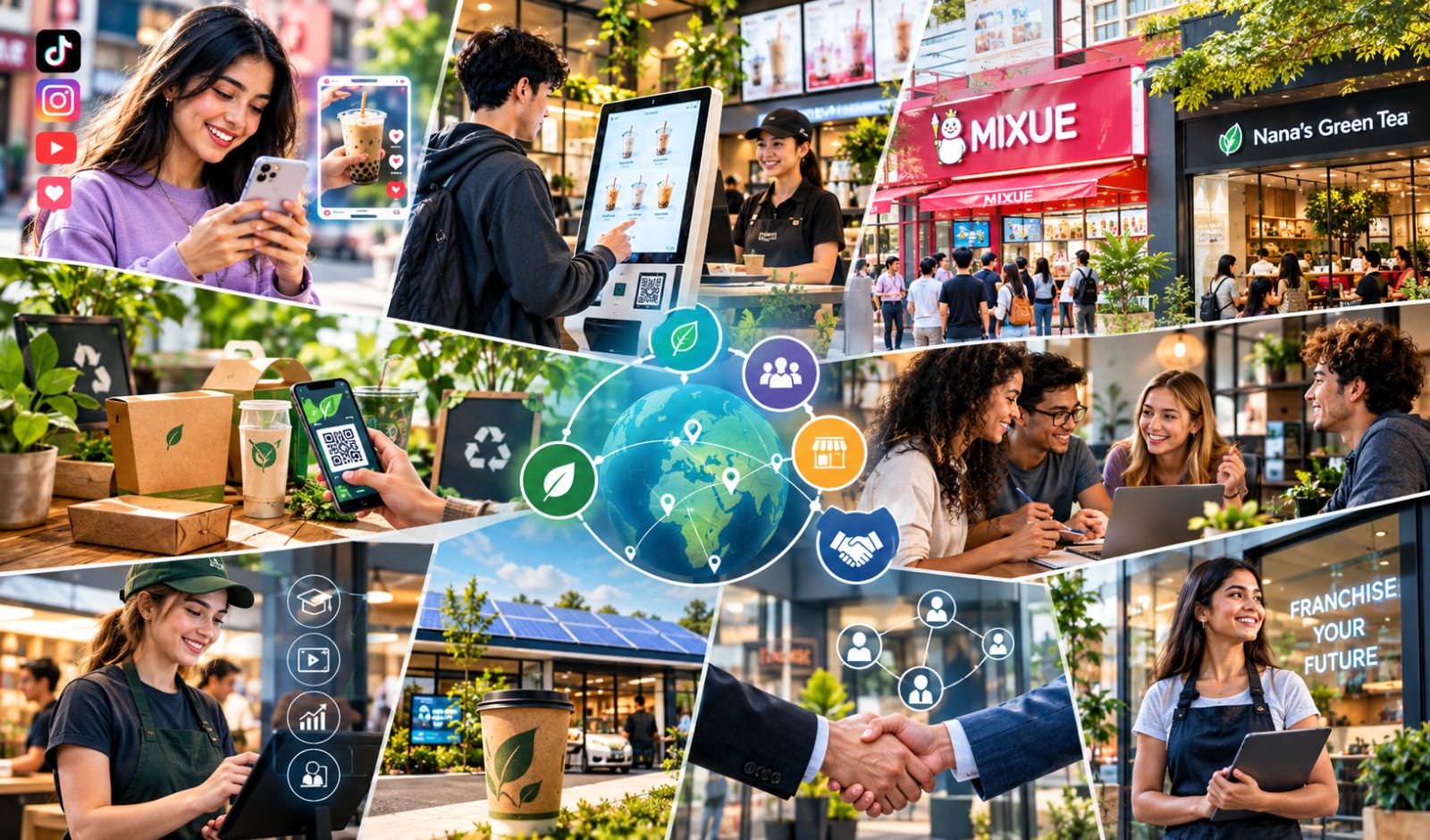
Global consistency still matters, but Gen Z expects brands to feel relevant to the market around them.
Franchise systems have traditionally relied on consistency, but younger consumers increasingly expect global brands to understand local tastes, culture and digital habits. Baker McKenzie’s 2025 Asia-Pacific analysis highlighted the importance of local adaptation alongside digital ordering and loyalty technology.
Asian brands such as Mixue and Nana’s Green Tea illustrate how distinctive products, youth-oriented branding and digital engagement can travel across markets while retaining a clear local identity. For franchisors, the challenge is finding the right balance: protect the core brand while giving franchisees enough flexibility to adapt menus, marketing and customer engagement to local demand.
For Gen Z, a global franchise does not have to feel generic. Local creators, community partnerships and market-specific content can make an international brand feel much closer to home.
Sustainability Needs Proof
Younger consumers increasingly expect evidence behind brand claims.
Sustainability is moving beyond marketing and into franchise operations. Brands face practical questions around packaging, food waste, energy consumption, sourcing and recycling and whether these efforts can be measured consistently across locations.
For franchise systems, broad claims are increasingly less useful than visible, measurable action. A brand that can demonstrate reduced packaging, lower energy use or improved waste management gives franchisees and customers something concrete to evaluate.
The scale of franchising can also make sustainability initiatives easier to test and expand. A successful programme at a group of locations can potentially be standardised and rolled out across the wider network.
Franchising Is No Longer One-Way
Customers, employees and franchisees increasingly expect two-way communication.
The traditional franchise relationship has centred on standards, training and compliance. Gen Z is adding another expectation: being heard.
Customers provide immediate feedback through reviews and social media. Employees see operational problems firsthand. Younger franchisees may identify digital trends and local opportunities before they become visible at the corporate level.
This does not mean giving up brand control. Instead, franchisors can create faster feedback loops through franchisee advisory groups, digital platforms, customer data, social listening and regular communication.
The result is a more responsive system in which franchisors provide brand equity, infrastructure and expertise while franchisees contribute local knowledge and market intelligence.
From Franchisee to Brand Contributor
Younger operators can become a source of innovation, not just execution.
As more younger entrepreneurs enter franchising, their role can extend beyond operating an individual location. Their understanding of social media, digital tools and emerging customer behaviour can provide valuable insight to the wider network.
Franchisors can capture this knowledge through pilot programmes, franchisee innovation groups and structured feedback channels. The objective is not to let every location reinvent the brand, but to allow successful local ideas to be tested and potentially scaled across the system.
What This Means for Franchise Systems
The answer is not to rebuild franchising around Gen Z, but to make the model more responsive.
Modern franchise systems increasingly need:
- Digital-first customer journeys connecting social media, ordering, loyalty and physical stores.
- Faster feedback loops between customers, employees, franchisees and corporate teams.
- Controlled local flexibility for marketing, products and community engagement.
- Continuous learning beyond initial franchisee training.
- Measurable sustainability rather than broad environmental claims.
- New pathways into ownership for younger operators and employees.
- Technology-enabled operations using AI, analytics and automation.
Gen Z is not necessarily challenging the fundamentals of franchising. It is changing expectations around how quickly, locally and transparently those fundamentals are delivered.
The brand, operating system and consistency remain important. But the franchise networks that can combine those strengths with digital connectivity, local relevance and continuous feedback will be better positioned to adapt as the next generation becomes both a larger customer group and a larger pool of business owners.