
The fitness franchise industry is evolving beyond traditional gym memberships, with growing demand for concepts that combine structured training, personalised coaching and recovery. For franchisors, however, the challenge extends beyond creating an appealing workout experience. Building a business that can scale sustainably, deliver consistent member experiences and support franchisee profitability remains the real test.
STRIDE Fitness is positioning itself around this shift, combining treadmill cardio, full-body strength training, coach-led classes and a dedicated Recovery Zone within a single boutique fitness concept.
At the helm is Shaun Grove, CEO and owner of STRIDE Fitness, a franchise executive whose experience spans franchise law, multi-unit ownership and brand leadership. As president of Club Pilates, Grove helped scale the business from approximately 25 locations to more than 700 studios worldwide. He subsequently led Rumble Boxing, overseeing the sale of more than 350 franchise locations and territories before acquiring STRIDE Fitness from Xponential Fitness in February 2024.
In this exclusive conversation with Fran.News, Grove discusses the lessons behind scaling major boutique fitness brands, the changing profile of fitness franchise investors and the operational foundations required to build a sustainable multi-unit business.
Abha Garyali Peer: You have experienced franchising as a franchisee, franchisor, attorney and executive, while helping scale Club Pilates from around 25 to more than 700 studios. How has seeing franchising from all sides shaped your view of what separates a successful franchise system from one that struggles to scale?
Shaun Grove: Having experienced franchising from all four perspectives has fundamentally shaped how I think about building a franchise system. Each role teaches you something different. As an attorney, you learn the importance of structure, documentation and protecting the integrity of the system. As a franchisee, you learn what it actually takes to operate a business, manage cash flow, hire people and serve customers every day. As a franchisor and executive, you have to bring those perspectives together while building an organization that can support growth.
One of the biggest lessons I learned helping scale Club Pilates from approximately 25 studios to more than 700 is that selling franchises and building a successful franchise system are two very different things. You can sell territories quickly, but if you don’t have the infrastructure, training, support and operating systems to help franchisees succeed, growth can become a liability rather than an advantage.
I believe successful franchisors are disciplined about three things. First, they have a compelling consumer proposition that gives people a reason to choose the brand. Second, they have a repeatable business model that can be taught and executed by different owners in different markets. Third, they understand that the franchisor-franchisee relationship is a partnership that requires ongoing investment from both sides.
At STRIDE Fitness, we’re focused on building all three. We want to grow, but we want to grow the right way. The real measure of success isn’t simply how many locations you have. It’s whether you’ve built a system in which franchisee owners can operate strong businesses, members receive an exceptional experience and the brand becomes more valuable as it expands.
A growing number of franchise owners are first-time entrepreneurs, while others are experienced professionals looking for a second career. What are you seeing in the next generation of fitness franchise owners?
SG: I’m seeing a broad range of people who are looking for more than just an investment. They’re looking for an opportunity to build something of their own, create a meaningful connection with their community and participate in an industry they’re passionate about.
Some candidates are experienced entrepreneurs who understand business ownership and are looking for their next growth opportunity. Others are corporate professionals who have spent 20 years building someone else’s business and are ready to apply those skills to something they own. We’re also seeing people who are passionate about health and wellness but haven’t necessarily worked in the fitness industry.
I think that’s one of the advantages of franchising. You don’t necessarily have to invent a business from scratch or possess every technical skill required to operate it. You can invest in an established concept, learn a proven operating system and build a team around you.
At STRIDE Fitness, we don’t believe you need to be a personal trainer to become a successful franchisee. You need to be a good leader, understand accountability, be willing to learn the business and have the financial resources to support the investment.
I would also emphasize that owning a franchise is not a passive investment. The most successful owners are engaged in their businesses, understand their numbers and take responsibility for building the right team and culture to operate it.
Ultimately, I think the next generation of fitness franchise owners will be defined less by their previous job titles and more by their ability to lead people, execute consistently and build businesses that serve their communities.
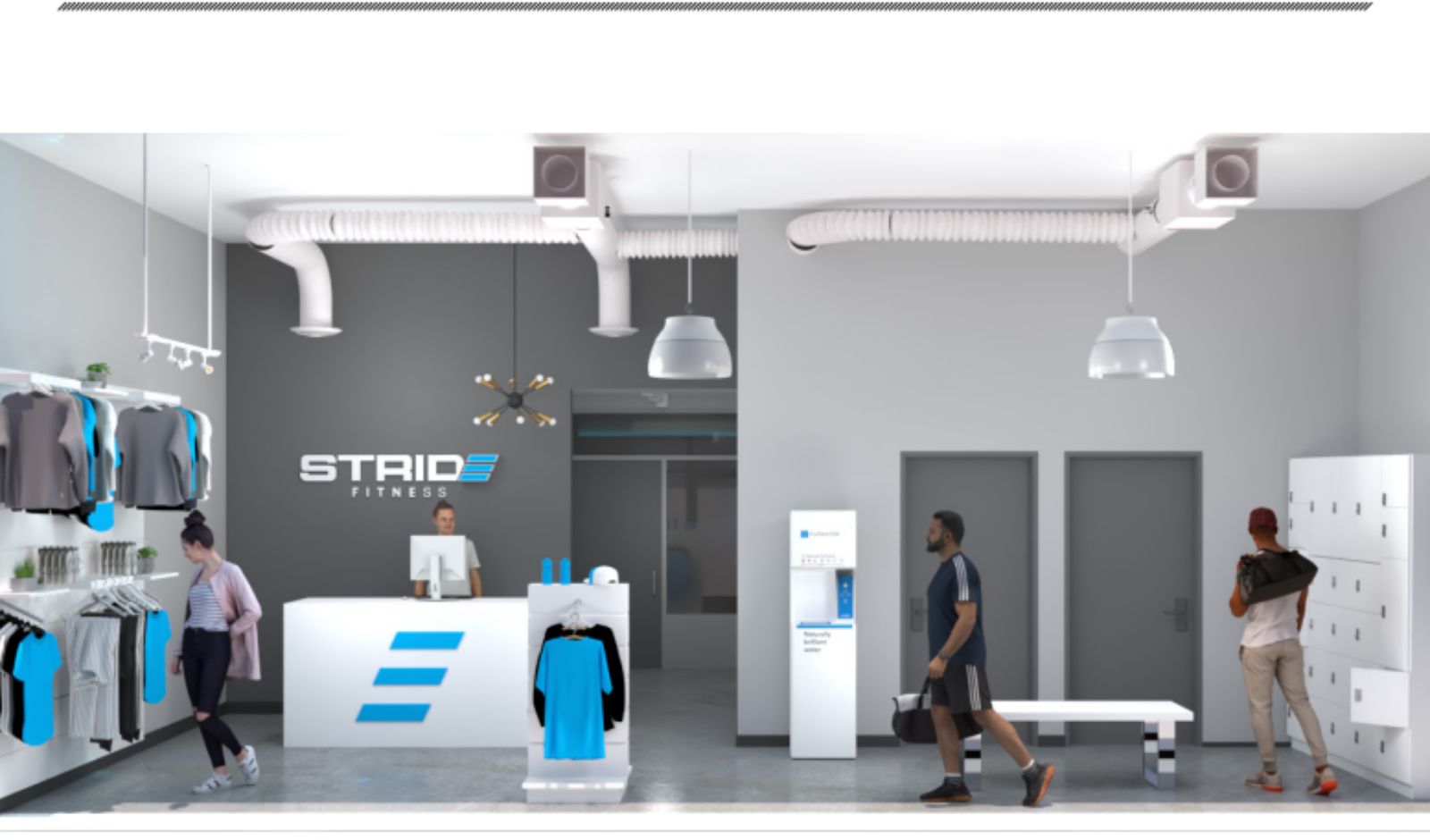
The health and wellness sector is now one of franchising’s largest and fastest-growing categories. What is driving the shift from traditional fitness toward a broader preventive-health and wellness mindset, and why do you believe this represents a long-term change in consumer behaviour rather than simply another fitness trend?
SG: I think we’re seeing a fundamental shift in how people think about health. For a long time, fitness was often framed around appearance, weight loss or preparing for a particular event. Those goals still matter to many people, but consumers increasingly recognize that physical activity is connected to how they feel, how they perform, how they manage stress and how they want to live as they get older.
People are thinking more about strength, mobility, cardiovascular fitness, recovery and maintaining an active lifestyle over the long term. They’re also becoming more intentional about where they spend their money. They want to understand the value they’re receiving, and they want experiences that help them stay consistent and accountable.
I believe this is a long-term shift because it is connected to something fundamental: people want to feel better and maintain their quality of life. The specific workouts, technologies and brands will continue to evolve, but the underlying need isn’t going away.
For the fitness industry, that creates an opportunity to move beyond selling access to equipment and toward delivering a more complete and fulfilling, coached experience. That’s very much how we think about STRIDE Fitness. We’re combining strength training, cardio and recovery in a single concept, with a single membership, because we believe our members benefit from a more holistic and comprehensive approach to fitness and wellness.
I also think the industry needs to be thoughtful about the distinction between supporting overall wellness and making medical claims. We’re a fitness brand, and our role is to help people train consistently, improve their fitness and build healthier habits. The brands that will stand the test
of time are the ones that connect those consumer needs to an experience people genuinely enjoy and want to maintain.
IFA/FRANdata projects the franchised health and wellness sector to exceed 99,000 units in 2026. How is STRIDE responding to consumers who want measurable outcomes rather than simply access to a gym, and how are expectations around fitness, recovery and overall wellbeing changing?
SG: I think consumers increasingly want to know that their time and money are producing something meaningful. Access to fitness equipment is widely available. What’s more difficult to find is a structured experience that helps people train effectively, stay accountable and measurably recognize their progress.
At STRIDE Fitness, we approach that through coached programming, real-time data performance tracking and the combination of strength, cardio and recovery. Our curated workouts are intentionally structured and change every day of the year, our programming changes throughout the week, and our coaches help members adjust the intensity to their individual fitness levels in every class. That allows a first-time exerciser and a highly conditioned athlete to train within the same overall system and programming, during the same class. Our members are able to see their performance on the screen during class, and then they receive a customized message after class breaking down the performance data for them. This allows them to track their progress and visually monitor their achievements.
Recovery is another distinctly important part of the fitness journey and member experience. Every STRIDE Fitness studio is designed around more than the workout itself, with a dedicated Recovery Zone that gives members additional ways to incorporate recovery into their fitness routines and overall lives. We believe this creates a more complete and impactful experience for our members. Instead of piecing together different memberships and services, members can access coached-led training and recovery in one place.
I also think expectations around performance measurement are evolving. Technology can provide valuable feedback, but data alone doesn’t change member behaviour. The real value comes when you combine information with coaching, consistency and accountability.
From a business perspective, we see an opportunity to deliver a holistic experience that gives consumers clear reasons to join, visit regularly and remain engaged over time. We want STRIDE Fitness to be a place where members can see their progress, embrace a community and feel supported and continue challenging themselves as their goals change and lives evolve.
STRIDE brings together strength training, cardio, coaching and recovery within one boutique concept. As consumers increasingly view fitness as part of a broader wellness and longevity strategy, how do you see the traditional definition of a “fitness business” evolving over the next few years?
SG: I believe the traditional definition of a fitness business is expanding. Historically, you might have had a gym for strength training, a boutique studio for pilates or yoga or spin, a separate service for recovery and perhaps a coach or personal trainer helping you put everything together. Consumers are increasingly looking for a more integrated experience with multi-modalities and recovery under one roof for one membership.
I believe the next generation of successful fitness concepts will make it easier for people to train consistently, understand their progress and build fitness and recovery into their everyday lives. At STRIDE Fitness, each class combines strength training with treadmill cardio with professional coaching, and we provide a dedicated Recovery Zone for pre or post workout recovery. The objective is to create a holistic experience that completes the entire performance cycle and supports a member’s broader fitness routine rather than focusing on a single type of workout.
I also think the role of the coach will become more important, not less. As consumers gain access to more information, apps and wearable technology, they will still need help translating that information into effective training, maintaining consistency and adapting their routines as their goals and lives evolve.
From the franchise perspective, this evolution creates opportunities for concepts that can bring multiple complementary services together without making the business unnecessarily complicated and costly to open and operate. The challenge is to provide a more complete and comprehensive consumer experience while maintaining a clear brand identity and a repeatable operating model. Ultimately, I believe fitness businesses will increasingly compete on the quality of the overall experience, the relationships they build with their members and their ability to become an integral part of their members’ lifestyle.
What changes operationally and financially when an owner moves from one studio to multiple locations, and what signals tell you that a franchisee is ready to scale?
SG: I believe the answer to this question really depends upon the quality of the franchise operating system, the franchisors’ corporate team and the level of support provided to the franchise owners. Generally speaking, if the operating system and support structure is strong and solid, it should be a natural progression from owning and operating one location to developing multiple studio locations in your market.
Unless you are a well-seasoned multi-unit franchise owner coming into a new franchise system, the first studio is often a learning experience for a new franchise owner, and will likely require a little more of the owner’s direct involvement. The owner will want to gain a grasp on sales, hiring, marketing, member relationships and day-to-day problem-solving as they build out their team and form their management style. Gaining this experience is invaluable because when you open a second or third location, you have to transition from managing individual tasks to building a team and a management structure that can execute consistently without the franchise owner’s direct involvement in every decision. This is where a strong and solid franchise operating system and support structure is imperative for overall system success.
Before I would encourage a franchise owner to consider another location, I would want to see several things. First, the existing studio needs to demonstrate sustainable performance. That means looking beyond revenue or membership growth to understand profitability, retention, staffing costs and the overall health of the business. Second, the franchise owner needs a capable team and documented processes. If the first studio struggles whenever the franchise owner takes a vacation, it probably isn’t ready to scale. Third, the franchise owner needs adequate capital and a realistic financial plan for the next location. Finally, the franchise owner needs to demonstrate that they can replicate the member experience and company culture, not just the physical studio.
My general philosophy is that you should scale a model that works, not use additional locations to try to fix a model that doesn’t. Multi-unit growth can be a tremendous opportunity, but it needs to be built on operational discipline, sound financial fundamentals and a franchise operating system and support structure that is strong and solid.
What should prospective franchisees examine most carefully before investing, particularly around territory selection, real estate, staffing, member retention and unit-level economics?
SG: I would encourage prospective franchise owners to do their due diligence and homework in five specific areas, and I would start with the financial model.
First, understand the unit economics. Review the initial investment, working capital requirements, recurring expenses and assumptions behind the business plan. If the franchisor provides a financial performance representation in its Franchise Disclosure Document (FDD), examine exactly what it measures, which locations are included and how representative the results may be of the studio you’re considering. Don’t build your investment decision around the most optimistic scenario.
Second, evaluate the territory and real estate you are considering very carefully. Analyze the demographic data thoroughly. Population and household income matter, but so do competition, accessibility, visibility, parking, traffic patterns and the characteristics of the surrounding community. A location can look attractive on paper and still be difficult to operate successfully.
Third, understand the staffing model. In a boutique fitness business, the quality of the coaches and studio team has a direct influence on the member experience. Prospective owners need a realistic plan for recruiting, training, retaining and developing those people – and also for replacing them as the business evolves.
Fourth, focus on retention, not just presales. Opening with a strong membership base is important, but the long-term health of the business depends on whether members continue showing up, renew their memberships and recommend the studio to others.
Finally, evaluate the franchisor itself. Talk to existing franchise owners, understand the support provided and ask difficult questions about what happens when a studio underperforms.
I would also encourage franchise candidates to assess their own fit for the business. Do they have the financial capacity, time commitment, leadership skills and appetite for operational responsibility? A franchise can provide a valuable framework, but it doesn’t eliminate business risk. The best investment decisions come from understanding both the opportunity and the obligations that come with it.
Digital workouts, wearables and at-home fitness have made exercise more accessible, yet boutique fitness continues to build strong communities. What can a physical fitness
franchise deliver that technology cannot, and how important will coaching and community become as consumers have more digital alternatives?
SG: I believe technology is an important part of the future of fitness, and I don’t view digital fitness as something the industry needs to fight against. It has made exercise more accessible and given consumers more flexibility in how they train. But accessibility and consistency are two different things. You can download an excellent workout or buy a wearable that tracks a tremendous amount of information. What technology can’t fully replicate is the experience of walking into a room where a coach knows your name, understands your goals, encourages you to push yourself and helps you feel accountable.
There is also something powerful about training alongside other people. You see someone else working toward a goal, you encourage each other, and over time those shared experiences develop into relationships. For many members, that connection becomes just as important as the workout itself. That’s particularly relevant to STRIDE Fitness because our model is designed around coached group training and the community that is created within each studio location. The technology and performance tracking are valuable, but they’re part of a broader experience built around people.
I also believe physical studios provide an important structure for people who struggle to maintain a routine on their own. When you reserve a class, know your coach and become part of a community, you create more reasons to show up. I expect digital tools and wearables to become increasingly integrated into boutique fitness. The strongest brands will use those tools to improve the experience rather than treating technology as a substitute for human connection. At the end of the day, technology can tell you what to do, but great coaching and community help you keep doing it.
As STRIDE expands, how do you balance national scale with the local ownership and community connection that make a boutique fitness concept successful?
SG: I believe the key is to be consistent about what should be standardized and intentional about what should remain local. The brand experience, programming, training standards, operating systems and core service expectations need to be consistent. A member should recognize STRIDE Fitness and understand what to expect regardless of which studio they visit.
But the communities and relationships that make a studio successful are built locally. Franchisees need to understand their markets, know their members and build connections with the businesses, organizations and people around them. That might mean partnering with a local employer, supporting a charitable cause, hosting a community workout or developing
relationships with other local businesses. Those activities should reflect the community rather than follow a generic national marketing calendar. Our job as the franchisor is to provide the tools, standards and support that allow our franchise partners to build successful businesses. Their job is to bring the brand to life in their markets.
My experience in franchising has taught me that national scale and local ownership aren’t competing priorities. When the system is designed properly, they reinforce each other. The national brand creates recognition and consistency, while local ownership creates relationships and accountability. As we grow STRIDE Fitness, I want us to maintain that balance. We should become more sophisticated in the way we support our franchise partners as the system expands, while ensuring that every studio continues to feel like an important part of its own community.
Where do you see the biggest opportunity for STRIDE Fitness over the next three to five years; more studios, multi-unit franchisees, new markets, international expansion, or deeper integration of fitness and wellness?
SG: I see our biggest opportunity in building a stronger, more scalable franchise system that can support meaningful domestic growth over the next several years. Opening more studio locations is absolutely part of that vision, but I don’t view unit count as the strategy itself. The strategy is to build a differentiated consumer brand, improve the economics and operating performance of individual studios, and develop the infrastructure needed to support our franchise partners as their businesses grow.
Our immediate priorities are franchise sales, studio-level unit economics, and more comprehensive, clearly structured training for our franchise partners and their teams. Those priorities are interconnected. We need to attract the right franchise partners, help them build strong businesses and give them the tools to execute consistently.
I also see meaningful potential in multi-unit ownership. As franchise partners establish successful operations and develop strong management teams, some will have the opportunity to expand into additional territories. That can create a powerful growth engine, provided we remain disciplined about financial performance and operational readiness.
Geographically, we’re interested in expanding into markets where the consumer demand, real estate and franchise partner align with the model. I would rather enter the right market with the right owner than pursue expansion simply to put another pin on the map. And as we grow, we’ll continue developing the relationship between strength, cardio, recovery and community that differentiates STRIDE Fitness. We believe that combination gives us an opportunity to appeal to a broad range of consumers and evolve alongside their fitness needs.
International expansion may be an opportunity over time, but our focus is on building a strong foundation that can support sustainable growth. Ultimately, my vision is for STRIDE Fitness to become a recognized leader in the next evolution of boutique fitness. I want us to build a brand that consumers are excited to be part of and a franchise system that entrepreneurs are proud to own.